Rolling Stock: Why Britain's Small Brewers Are Hiring Their Canning Line by the Day

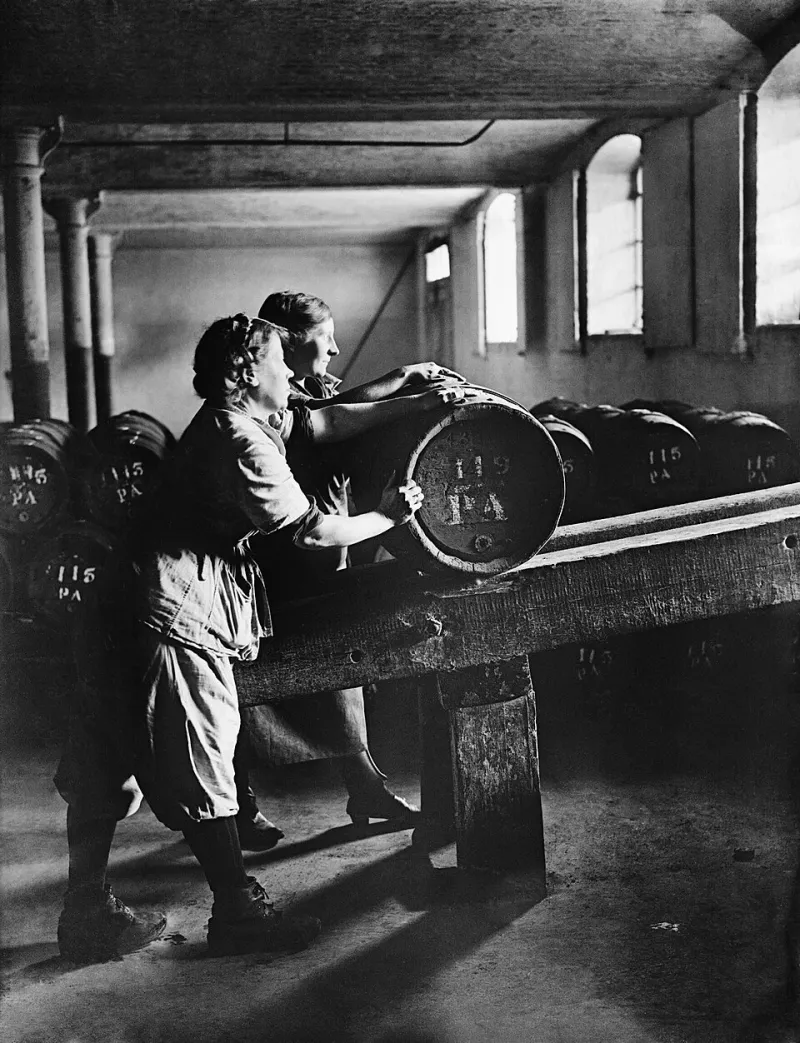
Photo: David Anstiss, CC BY-SA 2.0, via Wikimedia Commons
There is a particular sound that has become familiar in British brewery yards: the low, mechanical sigh of a mobile canning line being levelled on tarmac. It arrives on a lorry, gets wheeled into place, and for a day or two your brewery becomes a packaging hall. Then it leaves, and you have pallets of professionally filled cans where previously you had a bright tank and a vague sense of ambition.
For years, the canning line was the preserve of breweries big enough to justify a six-figure capital outlay. The rest of the market made do with bottles, kegs, or the slightly apologetic hand-bottling run. Mobile canning has changed that calculation. It has not made packaging free, and it has not removed the trade-offs. But it has made the maths plausible for breweries that would never have considered a line of their own.
The economics of not owning
The appeal is straightforward. A small brewery can book a contractor, pay per litre or per can, and avoid the twin horrors of capital expenditure and underused machinery. A modest canning line might cost well into six figures once you factor in installation, services and the space it eats. A mobile operator turns that into an operating cost. For a brewery doing a few thousand litres a month, that is the difference between packaging your beer and not.
The pricing structures vary, but the principle is consistent: you pay for the run, often with a minimum volume attached. That minimum is the first real constraint. Many mobile canning outfits work to runs of around 1,000 to 2,000 litres, sometimes more, depending on the machine and the operator. For a brewery producing a 500-litre batch of a seasonal pale, that means either scaling up, blending batches, or waiting until you have enough beer to make the visit worthwhile. It encourages a certain discipline. You learn to plan your packaging days around your fermentation schedule rather than the other way round.
There are other costs beyond the line itself. Cans, lids, sleeves or printed stock, label design, secondary packaging, and the labour to feed the machine all add up. Mobile canning is cheaper than owning a line, but it is not cheap. The breweries that make it work tend to be the ones that treat packaging as part of the recipe, not an afterthought.
Minimums, schedules and the art of the plausible batch
The scheduling question is where mobile canning gets interesting. Contractors run routes, and your brewery is one stop on a tour that might take in three counties in a day. That means you are slotting into someone else's logistics. If your beer is not ready, you do not get a second chance that week. If your fermentation stalls, you are either canning something you would rather not, or you are cancelling and hoping the next slot is not a month away.
The result is a different kind of brewing discipline. Small brewers who use mobile canning tend to become very good at predicting attenuation. They learn to build in a buffer, to have a backup batch, and to keep their bright beer tanks honest. It is not glamorous, but it is the kind of operational rigour that separates the breweries that last from the ones that fold.
There is also a social side to it. Packaging days are long, and the contractor's crew have seen every kind of brewery. They know when a tank is not ready, when a seam is running badly, and when a brewer has underestimated how much space a pallet of cans takes up. The good operators will tell you. The relationship is closer to a mobile service than a supplier, and the breweries that listen tend to get better runs.
Freshness is a logistics problem
The old knock on cans was that they somehow tasted metallic, which was never really true of a properly lined can. The modern concern is dissolved oxygen. Cans are excellent at keeping oxygen out once sealed, but the filling process is where the damage happens. A mobile line that is well set up and well run can hit low dissolved oxygen figures. A line that is rushed, or fed with beer that has been sitting in a warm tank, cannot.
For small brewers, the freshness trade-off is less about the can and more about the run. If you are canning a hop-forward pale ale, you want to be drinking it within a few weeks, not a few months. Mobile canning helps because you can package to order, in smaller volumes, rather than committing to a huge print run. That means you can keep your best beer moving through the system rather than sitting in a warehouse. It also means you can can a batch on a Tuesday and have it in a shop by the weekend. That is a real advantage over the traditional bottle run, which often involved a longer lead time and a bigger minimum.
Design on a deadline
The design implications are easy to overlook. When you own a line, you can afford to experiment with printed cans, even if the minimum order is large. When you use a mobile canner, you are often working with shrink sleeves or digitally printed stock. Sleeves give you flexibility, but they cost more per unit and can look slightly different from a fully printed can. Digital printing has improved enormously, but it still carries a premium at small volumes.
The result is a design language shaped by the process. Small breweries using mobile canning tend to favour bold, simple graphics that work at speed on a sleeve. They keep their range tight, because every new beer means a new sleeve or a new print run. They also learn to think about the can as a whole object, not just a label. The rim, the tab, the colour of the lid, the way the can sits on a shelf: these are all part of the shop window.
Cans as the new shop window
And that is the real shift. For a small British brewer, the can is no longer the compromise option. It is a 440ml billboard. It travels well, it chills fast, it stacks neatly in a fridge, and it does not need a bottle opener. In a market where shelf space is contested and online sales matter, the can is a more versatile piece of marketing than the bottle. It goes to festivals, it goes in subscription boxes, it goes in the rucksack of a walker on the South Downs.
That does not mean bottles are finished. There are styles and occasions where a bottle still feels right, and cask remains the beating heart of the British trade. But for the tiny brewery trying to look bigger than it is, the mobile canning line has become a quiet enabler. It lets you package like a grown-up without pretending to be one. You hire the machinery, you borrow the expertise, and you send your beer out into the world in a format that shops and drinkers now expect.
Where it goes next
The mobile canning sector is maturing. Operators are getting better at route density, which brings costs down. Small breweries are getting better at planning, which makes the runs smoother. The next step is probably more specialisation: organic runs, low-oxygen runs, short runs for taproom-only releases. The line that comes to you is no longer a novelty. It is part of the infrastructure of small-batch British beer.
Which is why the sound of a canning line in a brewery yard is worth listening to. It is not the sound of compromise. It is the sound of a small brewery deciding that its beer deserves a proper send-off, and finding a way to afford it.