Bar-Top Galleries: The Quiet Art Boom in British Pump Clips
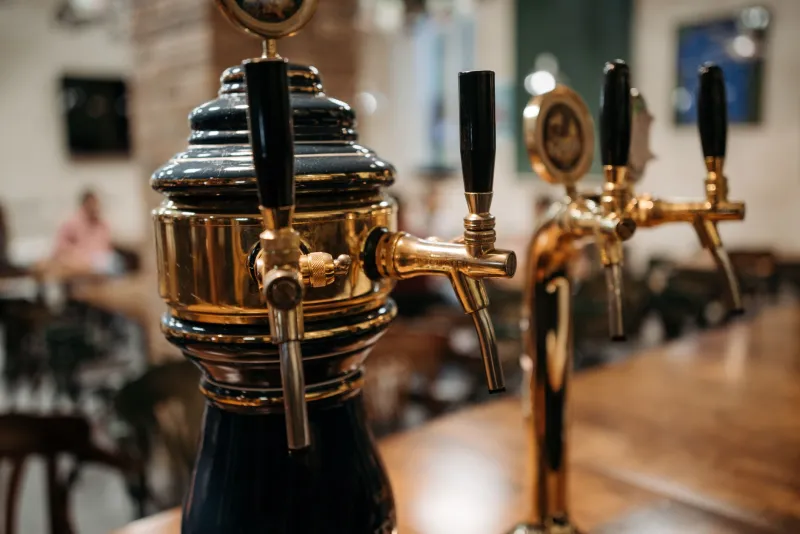
On a busy cask bar, a pump clip gets about as long as it takes to pull a pint to make its case. That is not much time. A drinker glances along the handpulls, clocks a name, a colour, maybe an ABV, and makes a call. For years, most small brewers treated the clip as a necessary label: brewery name, beer name, perhaps a slightly hopeful illustration of a hop cone. In 2026, that is changing. Across the UK, micro-breweries are commissioning artists and illustrators to make pump clips that feel less like paperwork and more like tiny exhibitions.
The result is a small but noticeable shift on the bar. Cask ale has always been a visual sale, even if nobody says so. A well-made clip does more than identify a beer. It signals what kind of brewery you are, where you are from and whether the beer inside is likely to be traditional, modern, fruity, dark or deliberately odd. In a crowded market, that square of card or plastic is doing a lot of heavy lifting.
A small square with a big job
The pump clip has a tough brief. It has to work at arm's length in poor pub lighting. It has to be legible to someone with a pint in one hand and a phone in the other. It has to carry the beer name, the brewery, the style and the ABV without turning into a wall of text. And increasingly, it has to look good enough that someone photographs it for social media or asks who designed it.
That tension is where the art comes in. A distinctive illustration can cut through the visual noise of a six-handpull bar, but it cannot obscure the basics. The best clips tend to be simple: one strong image, a clear typeface, a colour palette that matches the beer rather than fighting it. Brewers who get it right understand that the clip is not a canvas in a gallery. It is a shop window the size of a beer mat.
Commissioning the bar-top gallery
A growing number of small brewers are hiring local illustrators, printmakers and graphic designers rather than reaching for a template. The briefs often start with the story of the beer: the hop, the malt, the place, the person it is named after, the pub it was brewed for. From there, the artist turns that into an image that can survive being printed small and viewed from a distance.
The economics are more varied than you might expect. A simple one-off design might cost a few hundred pounds; a more involved illustration, with a proper concept and a small print run, can run into four figures. For a brewery making small batches, that is not loose change. But the clip is not a one-use item. It can be reused across the beer's life, adapted for cans, turned into taproom prints or used on the brewery's webshop. Several brewers now treat the artwork as part of the product, not an afterthought.
There is also the question of consistency. Some breweries commission the same artist for a whole range, building a recognisable house style. Others use a different illustrator for each beer, which can create a lively, collectible feel but risks looking scattered. The most convincing examples tend to have a clear rule underneath the creativity: same shape, same information hierarchy, same visual rhythm, even when the illustrations change.
The collector's eye
Pump clips have been swapped and squirrelled away by enthusiasts for decades, but the market has become more visible. Limited runs, artist editions and series designs are giving collectors something to chase. Brewery webshops occasionally sell clips or prints; pubs and taprooms sometimes have spares behind the bar. On auction sites, unusual or older clips can attract surprisingly focused bidding.
That collector culture is useful for small brewers, though it needs handling with care. A clip that people want to keep is a clip that keeps working after the beer has been drunk. It spreads the brewery's name into kitchens, sheds and boxes of pub memorabilia. But brewers also need enough clips for the bar, and pubs need them to stay on the handpull. The answer, for many, is to sell authorised copies or prints rather than encouraging anyone to walk off with the one doing the actual job.
What art can and cannot do
A beautiful pump clip will not rescue an inconsistent beer or a confusing price list. Cask drinkers are loyal but not sentimental about poor pints. The artwork can bring someone to the handpull; the beer has to bring them back. Nor should a clip be so stylised that it hides the essentials. If a drinker cannot tell whether they are ordering a 3.8% session bitter or a 6.2% stout, the design has failed at the first hurdle.
The real value is in differentiation. Britain has thousands of small breweries, and many make good beer. A pump clip that tells a story about a place, a person or an ingredient gives the drinker a reason to choose one handpull over another. It also gives the publican something to talk about, which is never a bad thing in a trade built on conversation.
The next small canvas
Short-run digital printing has made it easier for small brewers to experiment without ordering thousands of clips. At the same time, hand-drawn and hand-printed artwork has become more valued precisely because it looks human in a market full of clean templates. The next step is likely to be more collaboration: artists working with breweries on whole identities, local illustrators designing for taprooms and beer festivals, and clips that connect the beer to the town or venue where it is sold.
None of this makes the pump clip precious. It still has to survive a damp cellar, a busy bar and the occasional clumsy elbow. But it has become a genuinely interesting piece of small-batch branding: a little gallery at the end of the bar, asking for your attention for just long enough to earn a pint.