Tanks a Lot: How Britain's Used Brewhouse Market Got Serious
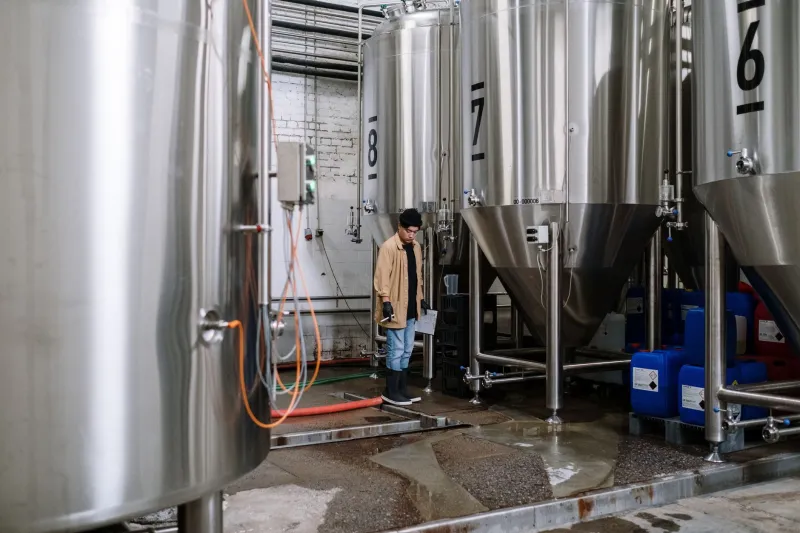
Walk into almost any small brewery in Britain and there is a decent chance part of the kit has had a previous life. A fermenter that once held someone else's pale ale. A cask that has rolled through three counties. A brewhouse that was, until recently, the centre of a very different business plan in a very different industrial unit.
The trade in used brewery equipment has always existed, but in 2026 it feels less like a scattered sideline and more like proper infrastructure. There are brokers, auction listings, Facebook groups, WhatsApp networks, equipment dealers and brewery consultants who know exactly who is selling a 10-barrel brewhouse and who might want it. For a sector that has spent years talking about closures, the second-hand market tells a more complicated story: one of churn, consolidation and a craft-beer scene that is finally old enough to have a pre-owned layer.
From distress sale to normal market
Some of this is straightforward economics. When a brewery closes, its tanks, cask washer, mill, kegs and packaging line have to go somewhere. When another brewery expands, it needs more capacity without the lead time or invoice of new kit. The used market is the bridge between those two events.
What has changed is the number of people willing to make that bridge their business. Ten or fifteen years ago, a closing brewery might have relied on word of mouth and a hopeful ad in a trade magazine. Today, equipment is photographed, listed, inspected, palletised and shipped with far more professionalism. Some dealers offer rigging and removal. Some finance brokers will look at used assets. Some auctioneers run dedicated brewery sales. The market has matured because the industry has matured, and because there is now enough equipment in circulation to create genuine choice.
That does not mean it is easy. Buying used kit is not like buying a second-hand van. It is closer to buying a small industrial building with a history you have to learn quickly.
The economics of starting on someone else's tanks
For a new microbrewery, the appeal is obvious. A new 10-barrel brewhouse, fermentation vessels, cold-liquor tank, cask washer and basic packaging setup can represent a serious capital outlay. Used equipment can cut that headline figure dramatically, sometimes by half or more, depending on condition, specification and how quickly the buyer can move.
But the saving is not the whole story. Removal, transport, rigging, new pipework, electrical work, commissioning and repairs can eat into the gap. A bargain brewhouse that needs a new control panel and a steam boiler upgrade may not look like a bargain once it is installed. Buyers also need to think about utilities: three-phase power, gas, drainage, floor loading, headroom and access. A tank that fits the listing may not fit through the door, and a brewhouse that fits through the door may not fit the budget for the building work around it.
There is also the question of finance. Some lenders are comfortable with used assets; others are not. Insurance can be more involved. And if the equipment is being bought from an administration or a closure, the buyer may be dealing with a seller who is motivated but not always able to provide full history or warranty. That is not a reason to walk away. It is a reason to do the boring work.
What to check before you wire the deposit
Used brewery kit rewards patience. The first rule is to see it running if you possibly can. A tank that holds water and a brewhouse that has brewed recently are very different from a tank that looks shiny in a photograph.
Check the vessels for corrosion, especially around welds, legs and any point where moisture has sat. Look at gaskets, valves, sample taps and manways. Ask about pressure ratings and any certification. If a vessel is a pressure vessel, the paperwork matters. If it is not, make sure everyone understands what it is and is not rated for. Electrical panels deserve a close look, as do pumps, motors, heat exchangers and control systems. Ask for manuals, drawings and service records. If they do not exist, factor that into your offer.
Casks are their own market. Used stainless casks can be excellent value, but condition, spear type and ownership history matter. Kegs and casks that have been through hard lives may need refurbishment. And anyone buying cask stock should be clear about what they are actually getting: the vessel, the fittings, the paperwork and the right to use it.
Then there is the building. Measure everything. Twice. Check access for a lorry, a forklift and a crane. Check floor strength and drainage. Check whether the previous owner's layout will work in your space or whether you are buying a puzzle with missing pieces.
The paperwork and the people
A good used-equipment deal is as much about people as metal. Ask why the kit is being sold. Ask who installed it, who maintained it and who can answer questions after the money has changed hands. Get a clear written agreement covering deposit, collection dates, condition, included ancillaries and what happens if something is missing. If the sums are large, consider using a solicitor or an escrow arrangement. Insurance for transit and installation is not optional.
It also helps to talk to other brewers who have bought used kit. The UK craft-beer community is small enough that reputations travel. A dealer who is straight about a tank's history is worth more than a listing that looks immaculate but comes with shrugs.
What the market says about British craft beer
The second-hand brewhouse trade is sometimes read as a symptom of struggle. There is truth in that. Closures create supply, and no one enjoys seeing a brewery's kit listed online with a deadline for removal. But a market also needs buyers, and the buyers are often small brewers finding a route into production, or established breweries adding capacity without betting the farm.
That is what maturity looks like: not a sector without failure, but one with ways to recycle the assets, knowledge and infrastructure when businesses change shape. In 2026, Britain's used brewery market is neither a boom nor a bust. It is a working part of the ecosystem, sold as seen and worth inspecting properly.