Nine Gallons, No Illusions: The Stubborn Case for the Firkin
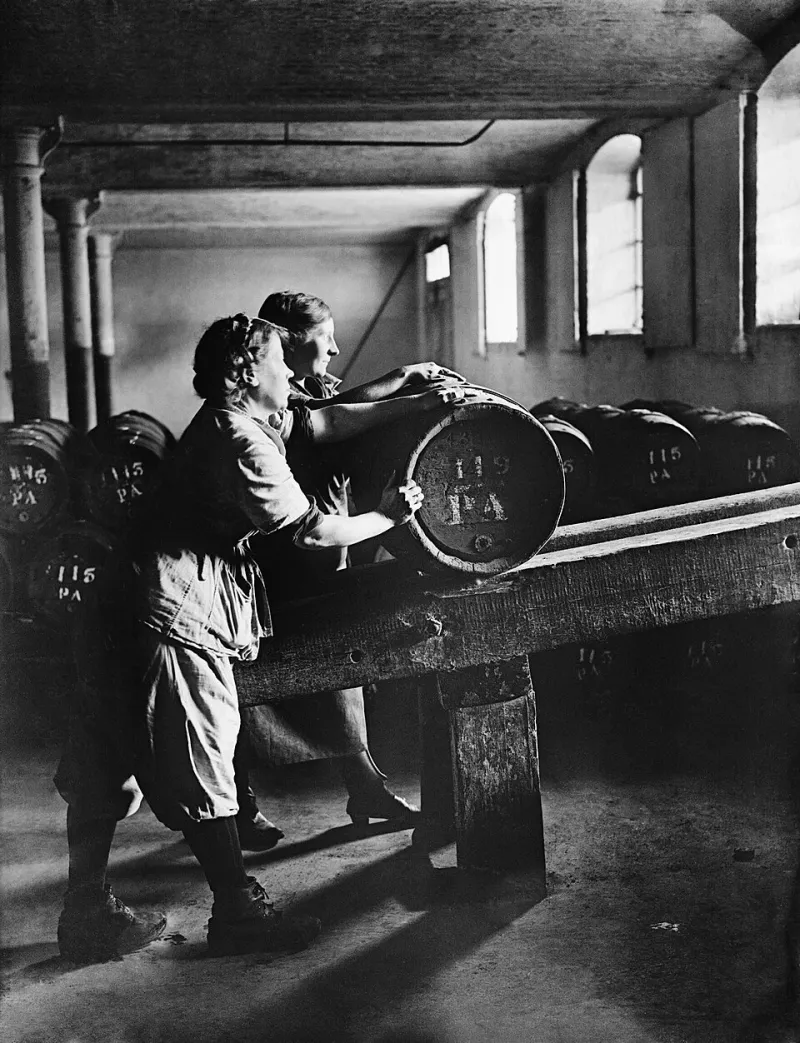
Photo: Horace Nicholls, Public domain, via Wikimedia Commons
The firkin is a nine-gallon cask: about 41 litres, or 72 pints once you have allowed for a sensible cellar and a not-so-sensible Friday night. It is also heavy, manual, returnable and faintly inconvenient. Ask a small brewer what they would change about it and you will get a list. Ask them whether they are still sending firkins out this week and the answer is usually yes. That contradiction is the whole story.
At Alechemy, we have watched the cask debate roll around for years. Pins look tidier. Kegs look simpler. Yet the firkin remains the format that many small British brewers treat as their calling card — and, in 2026, as a business decision that has to be justified line by line.
A cask that asks awkward questions
A firkin does not flatter a brewery. It exposes throughput. A full cask weighs the best part of 55kg, which means delivery is a two-person job or a careful one-person grumble. It needs stillage space, venting time and a cellar that is not already packed with lager, keg cider and the pub's Christmas decorations from three years ago. Once tapped, it has a short window in which to be excellent. If the pub is quiet, the clock wins.
That is why the firkin is often described as a risk. But the risk is not evenly distributed. A high-volume wet-led pub can turn a firkin in a weekend and make the maths look beautiful. A village local open four days a week may struggle to get through a pin, let alone nine gallons. The format only works when the account works.
The deposit is not the sale
Cask deposits are one of the quiet miseries of small-brewery administration. Brewers buy casks, stamp them, chase them and occasionally lose them to the great cellar in the sky. Some operate their own deposit schemes; others rely on informal arrangements or third-party pooling. Either way, a deposit is not a sale. It is a loan with a hangover.
For a small brewer, cash tied up in returnable containers is cash not spent on malt, wages or the boiler repair that arrives at the worst possible moment. Cask repatriation is a logistical hobby that nobody asked for. Yet the alternative — single-use containers or a wholesale shift to keg — throws away one of cask's genuine advantages: the container comes back, eventually, and the brewery gets another go.
The firkin's awkwardness is therefore partly an accounting problem. The deposit scheme has to be tight enough to protect the asset but loose enough not to scare off the pub. Get it wrong and the brewer becomes an unpaid cask lender with a beer problem attached.
Ullage: the tax on optimism
Then there is ullage. In cask ale terms, it is the beer that never becomes a sale — the portion left when a line is blown, the stock that comes back, the cask that was opened for a quiet Tuesday and never recovered. It is a tax on optimism, and a firkin collects more of it than a pin because there is simply more beer to lose.
This is where the romantic version of cask falls apart. A brewer cannot send out nine gallons and hope. They need to know the pub's footfall, its cellar discipline, its line-cleaning routine and whether the person in charge actually likes cask ale. A firkin placed badly is not a calling card; it is an expensive lesson in stock rotation.
Pins exist for exactly this reason. They let a brewer supply lower-volume venues without asking the pub to gamble on 72 pints. But pins carry their own penalty: more containers, more deliveries, more handling and a higher packaging cost per pint. The firkin's blunt advantage is that it spreads those costs over more beer.
The cellar-space squeeze
British pub cellars are not blank canvases. They are contested ground. Kegs stack; casks need stillage and access. A cellar that can hold six firkins might hold considerably more kegs in the same footprint, and kegs do not need venting or settling. For a pub with limited space, the firkin asks a direct question: do you want cask ale badly enough to give up the room?
Many do. Cask remains a point of difference, especially for locals and micropubs that have built their identity around a rotating handpull. But the answer is not automatic. In 2026, with energy costs, staffing and every square metre of cellar under scrutiny, brewers have to make the case in pints rather than sentiment.
The line-cleaning ledger
Line cleaning is another cost that looks small until it is multiplied. A cellar line costs roughly the same to clean whether it serves a pin or a firkin, so the cost per pint falls as throughput rises. That favours the firkin in busy pubs and punishes it in slow ones. It also explains why cask ranges tend to settle around a few well-chosen lines rather than a scattergun approach.
Keg has its own infrastructure: gas, couplers, regulators and different cleaning routines. It is not automatically cheaper. But it is more predictable. A brewer can send a keg to a venue and know it will not go off in three days. Cask offers freshness, character and a visible link to the brewery; it also offers a shorter rope.
The brewers who keep betting on firkins tend to be the ones who treat line cleaning and cellar management as part of the sale, not an afterthought. They train, they check, they collect. They know which accounts can turn a firkin and which should receive a pin, a keg or nothing at all.
Why the awkward cask survives
So why bother? Because cask ale is still one of the few things a small British brewer can offer that a global lager brand cannot fake. It is local, alive and tied to the pub. A firkin on the bar says something about the brewery's confidence and the pub's commitment. It is a shop window with a deadline.
The firkin also forces a relationship. It cannot be fired into a distribution centre and forgotten. It has to be delivered, tapped, cared for and drunk. For small brewers trying to build a name in a crowded market, that closeness is not a bug. It is the point.
The honest conclusion is not that the firkin is easy. It is that the firkin is useful. Pins, kegs and firkins are not rival religions; they are different tools for different venues. The brewer's job is to stop pretending every pub is a firkin pub and start matching the cask to the cellar, the footfall and the line.
Nine gallons will always be awkward. But awkward, in the right pub, is still one of the best bets in British beer.