The Menu as Margin: Why Small British Breweries Are Cooking Before They Expand
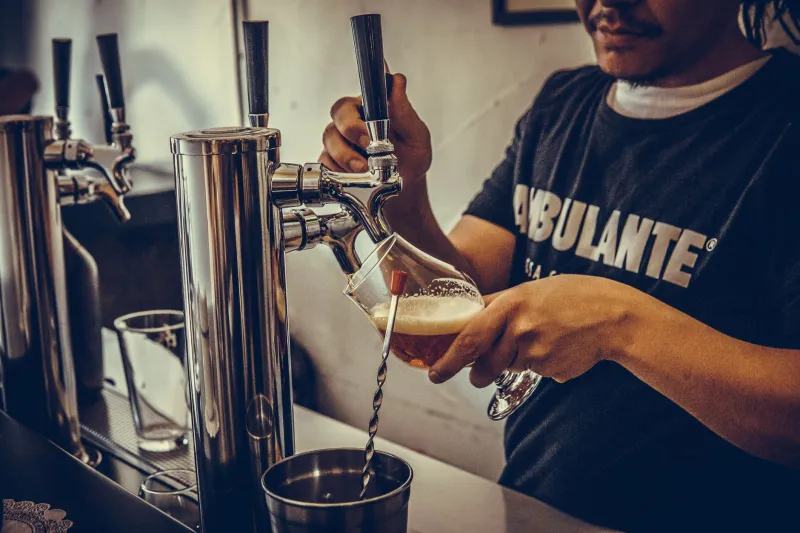
There is a moment in the life of many small British breweries when the next obvious purchase is a fermenter. The core range is selling, the taproom is busy on Saturdays, and the spreadsheets point to more capacity. Increasingly, though, the answer coming back from brewers is not stainless steel. It is a six-ring burner, a extraction canopy and someone who knows what to do with a sack of Maris Otter beyond mashing it.
Food has always hovered around beer in Britain, from the ploughman's lunch to the pub pie. But the past few years have seen a quieter shift: small brewers are treating the kitchen as part of the brewing business, not a bolt-on. In 2026, the question is less whether a taproom should serve food and more what kind of food operation a small brewery can actually sustain.
The arithmetic of a Sunday roast
A fermenter is a straightforward thing. It costs money, it holds beer, and if you fill it often enough it pays for itself. A kitchen is messier. Fit-out costs, extraction, gas safety, allergen training, staffing, waste and the small matter of getting people through the door on a Tuesday all sit outside the brewer's comfort zone.
Yet the taproom economics have changed. Keg margins have been squeezed by duty, energy and distribution costs, while the price of a pint in a brewery taproom still has a ceiling. Food offers a different lever. A well-run kitchen can lift average spend per head, extend dwell time and give people a reason to visit beyond a new release. It also turns a taproom from a destination for beer tourists into a local restaurant with beer attached — a subtle but important distinction when you are trying to build repeat trade.
The brewers making this work tend to start small. A limited menu, a short service window, a focus on dishes that can be prepped ahead and finished quickly. Sunday roasts are a recurring theme because they suit the British rhythm of the week: a slower day, a set price, a reason to book. But the smart operators are not trying to be gastropubs. They are trying to be breweries that happen to serve very good food.
Pairing flights and the beer-led menu
What separates a brewery kitchen from a generic taproom food truck is the link back to the brewhouse. Menus are being designed around the beer list rather than alongside it: a saison with a sharp, salty cheese; a porter with something smoked; a pale ale with a plate that does not fight it. Pairing flights have moved from novelty to useful sales tool, giving customers a structured way to try beer they might otherwise ignore.
This is where small brewers have an advantage over restaurants. They know their own beer intimately, and they can change the menu when a tank runs dry or a seasonal release lands. A kitchen that can pivot around the brewery's production schedule is more resilient than one chasing a fixed concept. It also makes the taproom feel like a place where the beer is the point, even when the food is excellent.
There is a practical upside, too. Brewery kitchens can use spent grain, trub and other by-products in bread, crackers or animal feed where regulations allow, closing a loop that customers increasingly ask about. It is not the main event, but it fits the wider mood in British brewing: less waste, more local sourcing, a story that hangs together.
The cost of getting it wrong
None of this is easy money. A kitchen can sink a small brewery if it is treated as a vanity project. The list of pitfalls is long: extract and ventilation requirements, food hygiene inspections, allergen management, staff retention, and the fact that a quiet Sunday can leave a lot of prep going in the bin. Brewers who have made it work tend to be ruthless about menu size and service hours. They do not open seven days because the beer is there; they open when the food can be done well.
There is also a skills question. Hiring a chef is not the same as hiring a brewer. It means a different rota, a different set of pressures and a different relationship with the public. Some breweries have found that a partnership model — a resident kitchen or a leased space — gives them the footfall without the full operational headache. Others have gone all in, building a kitchen that is as central to the business as the brewhouse.
A different kind of core range
The interesting shift is not that breweries are serving food. Pubs have done that for centuries. It is that food is being planned earlier, sometimes before the next tank is ordered. A strong kitchen is becoming part of the offer in the same way a strong core range is: it gives customers a reason to come back, brings in people who might not be beer obsessives, and creates a buffer against the unpredictability of wholesale trade.
That does not mean every small brewer should buy a fryer. It does mean the old hierarchy — beer first, everything else later — is being quietly rewritten. In 2026, the most interesting British breweries are not just asking what to brew next. They are asking what to serve with it, and whether the answer might pay for the next fermenter anyway.