Yeast, Will and Testament: The Quiet Trade in Brewery Legacies

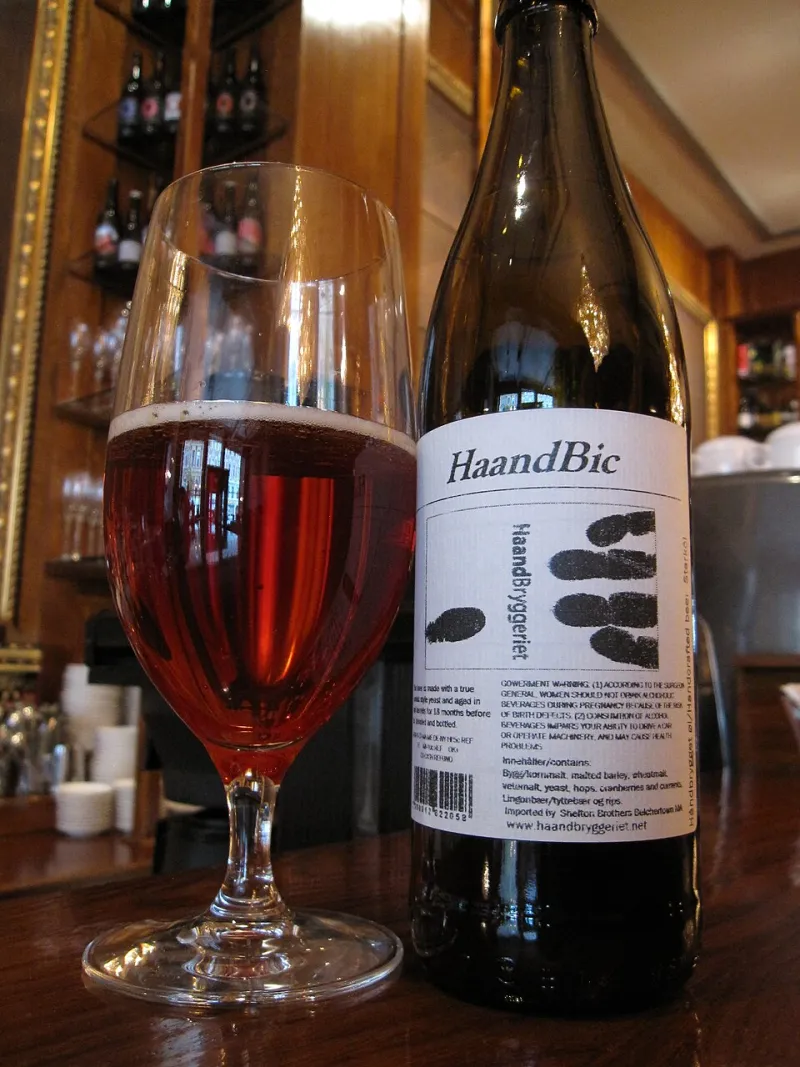
Photo: Johnathan Nightingale from Canada, CC BY-SA 2.0, via Wikimedia Commons
There is a particular quiet in a taproom during its final week. The chalkboard has been pared back to three lines. Someone has written sorry in the corner and left it there, half-smudged, because nobody wants to be the person who rubs it out. Regulars come in and order their usual, then sit for a bit longer than usual, as though staying put might hold the whole thing together.
Britain has had a lot of these weeks lately. The craft boom of the 2010s built a remarkable number of small breweries, and the cost pressures that arrived in the early 2020s — malt, carbon dioxide, energy, duty, the simple arithmetic of a hot water tank that never switches off — have taken a fair few back out again. Some closed outright. Some paused, which is brewery language for the same thing with the lights left on. Others shrank to a single brew a month and a market stall on Saturdays.
But closure is rarely the end of the story. It is, increasingly, the beginning of a handover.
The kit never really dies
Walk into any second-hand brewhouse sale and you will meet a strange reunion. A ten-barrel mash tun from a shuttered Yorkshire brewery sits beside a fermenter that once belonged to a place in Devon. Buyers arrive with a flask of coffee and a tape measure, and they are almost always other small brewers — people expanding by one tank rather than by ambition.
This is the least sentimental part of the process and, in its own way, the most reassuring. Stainless steel is stainless steel. A brewery's physical body gets disassembled, listed, photographed badly and sold on, and within a few months it is making beer again forty miles away. There is something decent about that. Nothing is wasted except the sign above the door.
The recipe is the easy part
Ask a brewer what actually matters when a business goes under and very few mention the equipment. Recipes, they will tell you, are mostly paperwork. A brew sheet is a set of numbers, and any competent brewer can hit those numbers within a point or two.
House yeast is different. A brewery's yeast is a living, drifting, occasionally difficult thing that has been repitched hundreds of times and has quietly adapted to its own kit, its own water, its own lazy cold liquor. You cannot photocopy it. It arrives, if it arrives at all, in a screw-top tube carried in a cool bag by someone who is quietly terrified of the M6.
I have spoken to brewers who have inherited a strain this way, and they describe the moment with a reverence usually reserved for christenings. There is a responsibility in it. If you bugger up the propagation, that flavour is gone for good — no archive copy, no backup, just a memory of how the bitter used to taste on a Thursday.
What a name is worth, and what it isn't
Then there is the brand. Trademarks, website, social accounts, goodwill — the intangible estate. When a small brewery goes into administration, these things get valued, and the valuation is usually brutal. A name that meant everything to four hundred regulars means very little on a balance sheet.
Sometimes a bigger regional brewer buys it and keeps the recipe alive as a guest beer, brewed at scale in a different town. Sometimes a former employee buys the name back for a token sum and uses it for occasional one-offs. Occasionally nobody wants it, and the trademark simply lapses, which is the least romantic ending available.
Drinkers are rightly wary of the zombie brand: the badge that reappears on a supermarket shelf having lost the room it was born in. But there is a counter-argument, and it is not a cynical one. A recipe that survives is a recipe that someone can still drink. For the regulars who defined their Friday by a particular pint, a decent version brewed elsewhere is not a betrayal. It is a stay of execution.
The revival, with the original brewer in the room
The most interesting corner of this market is the blessing. More and more often, a closed brewery's signature beer comes back for a night — brewed by a neighbouring outfit, with the original brewer on the mash tun, ostensibly supervising and actually just enjoying the smell.
These are odd, lovely events. The beer is often slightly different, because water and kit and yeast handling are different, and everyone knows it. Nobody minds. The point is not fidelity. The point is a proper send-off, done with permission rather than in spite of it, and a few hundred people in a room raising a glass to something that existed.
That etiquette matters more than it sounds. Beer is a small industry, and the way people behave when a competitor folds tends to be remembered. Buying a recipe from a receiver is legal. Asking a brewer whether they would mind is culture.
What the afterlife says about us
We are fond of talking about brewery closures as a business story — duty relief, small producer thresholds, the margins on a cask. All true. But the afterlife is a cultural story, and it asks a harder question: what do we think a brewery was for?
If it was a brand, then closure is a marketing problem. If it was a set of recipes, closure is an archive problem. But most drinkers will tell you, in their own words, that their brewery was a place where they knew someone's name and could be relied upon to be handed the right pint. That is not an asset class. It cannot be sold at auction, and it does not fit neatly into an insolvency schedule.
Which is why the handovers matter. Every time a yeast slant changes hands, or a retired brewer stands in someone else's brewhouse stirring someone else's grist, something is being passed on that the paperwork cannot capture. The tanks go, the signs come down, and the last chalkboard gets wiped eventually. But the flavour keeps pouring in another town, in another glass, on another Thursday.
If you are a regular at a small brewery, this is your quiet instruction. Drink the beer now. Ask the brewer the daft questions now. Buy the glass, learn the name of the yeast, and if the worst happens, do not be shy about following the recipe to wherever it lands next. The afterlife of a brewery is mostly made of people who bothered to remember what it tasted like.