Patience, Poured: Why Small British Brewers Are Blending Their Matured Stock
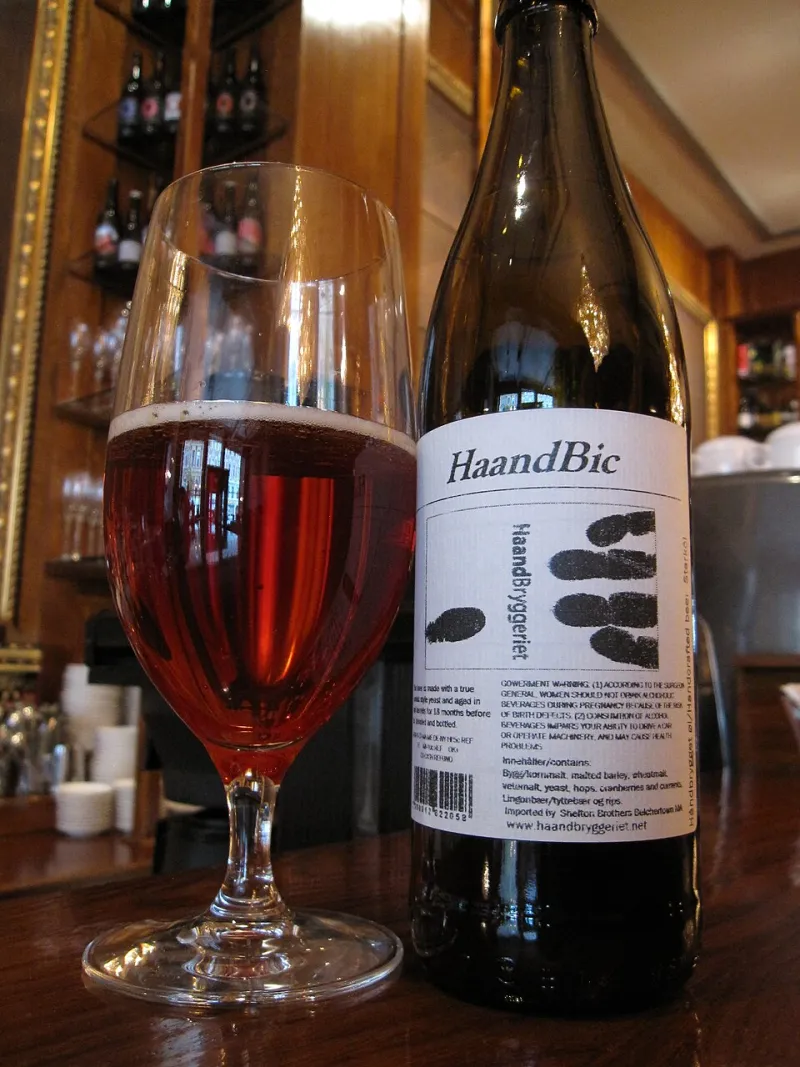
Photo: Bernt Rostad, CC BY 2.0, via Wikimedia Commons
In 2026, the most interesting room in a small British brewery is often not the brewhouse. It is the barrel store: cold, damp, faintly sweet with oak and old beer, and full of stock that will not earn a penny for months. For years, barrel-aged beer was treated as a side project in the UK. A brewery would fill a handful of casks, forget about them, then release whatever survived as a one-off. That is changing. Small producers are now building proper barrel libraries and treating blending as a separate skill, closer in spirit to the whisky blender's bench than to the brewer's kettle.
The library behind the brewhouse
The modern UK barrel programme is not just a row of sour barrels. Brewers are holding imperial stouts, barleywines, old ales, mixed-fermentation beers, saisons and strong dark beers in oak, alongside stainless tanks and foeders. Each vessel has a record: fill date, base beer, yeast, previous contents, cellar temperature and tasting notes. The library is both inventory and creative palette.
Some breweries still release single-barrel beers, and there is nothing wrong with that. A single cask can be thrilling, unpredictable and full of personality. But single barrels are hard to scale and harder to repeat. Blending gives a small brewer a way to assemble a release that is greater than any one cask: a sturdy base, a bright acidic note, a funky edge used sparingly, a soft oak character to round the finish. The result is not a compromise. It is a composition.
The economics of patience
Maturing beer is expensive in ways that are easy to overlook. Space is the obvious cost. A barrel store takes up floor area that could hold fermentation tanks or pallets of finished stock. There is also insurance, duty, sampling, cleaning, Cooperage repairs and the simple fact that a barrel sitting for two years is not generating cash. Evaporation takes its share, and so does the risk that a promising barrel turns acetic or dull.
Small brewers manage this with discipline rather than bravado. Many keep the library modest: a few dozen barrels rather than a few hundred. They release younger beers to keep the lights on, use taproom-only specials to test ideas and build memberships or pre-orders around aged releases. Blending helps here too. A house blend can make a larger, more consistent release from several barrels, rather than pinning the year's hopes on one fragile cask. It also gives a brewery a reason to price aged beer properly, without pretending every bottle is a museum piece.
The economics reward patience, but only when patience is organised. The breweries making this work tend to know which barrels are ready, which need another six months and which should be blended away before they dominate a batch. That is not luck. It is cellar management.
A vocabulary for time
Listen to brewers talk about matured beer and you will hear a language that borrows from whisky, wine and cooking without simply copying any of them. They talk about top notes and bass lines, about a barrel that provides lift or a blend that needs a bridge. They describe dried figs, cocoa nib, leather, tobacco, sherry, orchard fruit, damp cellar, umami and a finish that is long or clipped.
Blending decisions are often described in culinary terms. A sharp, acidic barrel might cut through a heavy stout. A soft, vanilla-rich cask might round off a harsh edge. A funky barrel might be used like seasoning: a small percentage that changes the whole dish. The aim is not to hide flaws. It is to build balance and make the aged character legible to the drinker.
A house style, not a lucky barrel
For a growing number of British breweries, blending is becoming part of their identity. They release a named house blend each year, with vintage variation but a recognisable palate. Drinkers learn what that producer's barrel programme tastes like: dry or sweet, bright or brooding, oak-led or beer-led. Limited editions sit alongside, but the house blend does the long-term work.
That shift matters commercially. A single rare barrel can create a buzz, but a house blend creates a relationship. It gives the brewery a reason to talk about process, provenance and patience. It also gives customers a way into a category that can otherwise feel intimidating or expensive. Transparency helps: clear labelling on age, barrel type and blend components builds trust, and it gives the taproom team a story to tell.
What to watch in 2026
The UK's small-batch scene is still finding its feet with blending, and that is part of the appeal. There is no single rulebook. Some producers will stay close to mixed fermentation, others will focus on dark and strong beers, and some will blend across both. The pressure will be on consistency, storage and honest communication. Aged beer is not cheap to make, and drinkers are right to expect clarity about what is in the bottle.
What is clear is that blending is no longer a footnote to barrel ageing. It is the point. Patience gets the beer ready; assembly makes it sing. For Britain's small brewers, that is a useful lesson from the whisky trade, adapted to a industry built on experimentation, local identity and the quiet satisfaction of a well-kept cellar.